
Interurban-Wilkinson Project
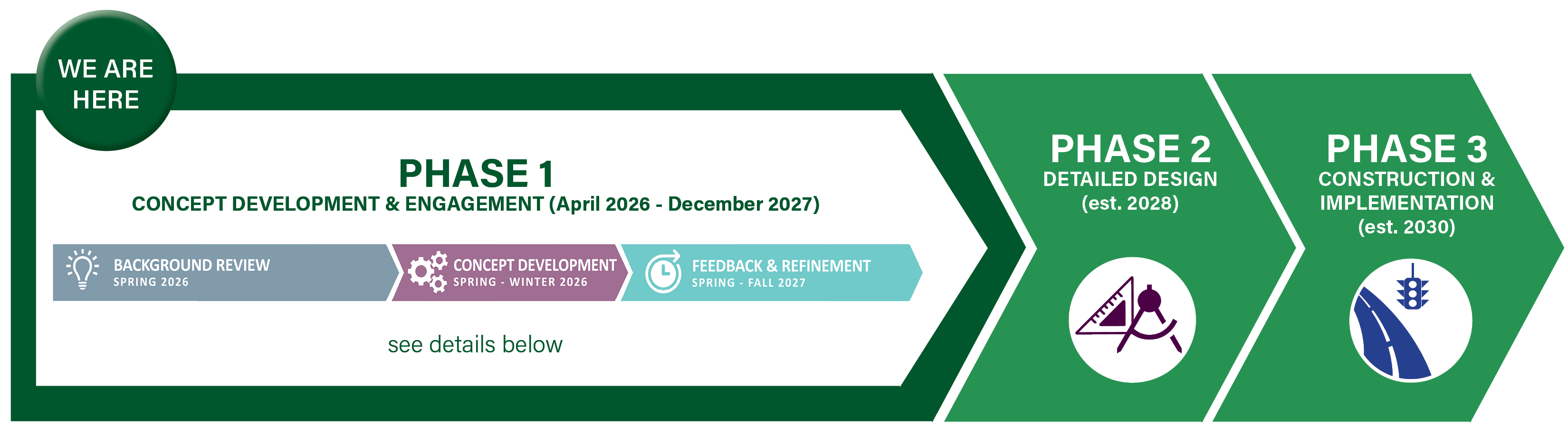
The Interurban-Wilkinson Project is a multi-phase initiative. The information below relates to Phase 1: Concept Development and Engagement. Phase 2 – Detailed Design and Phase 3 – Construction and Implementation will be added to this page as the project progresses.
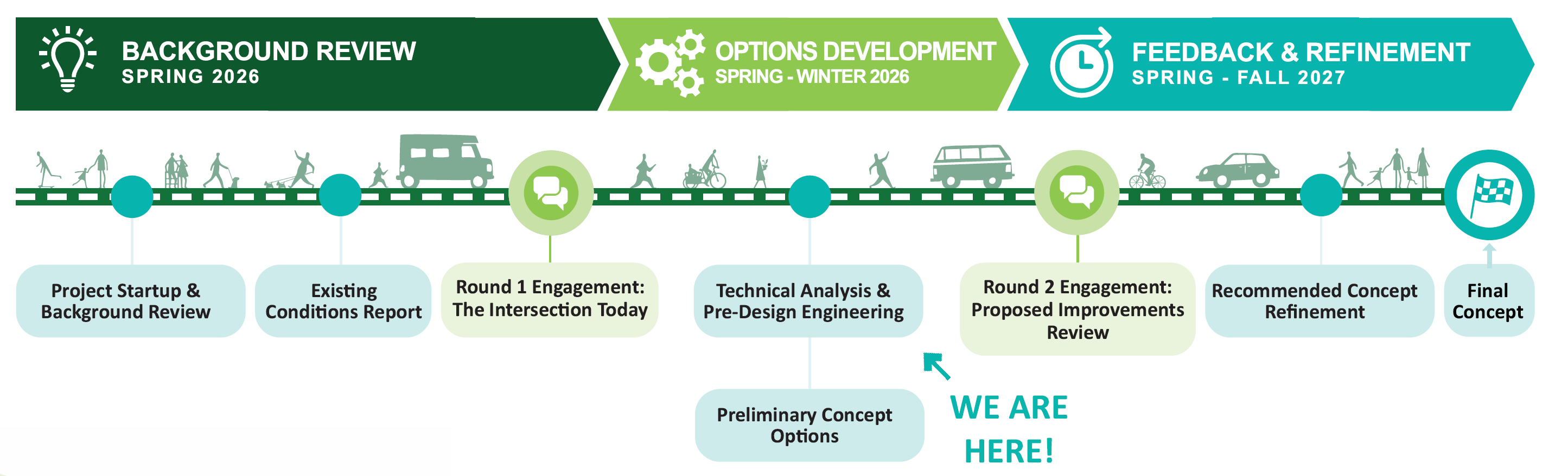
Project Timeline
Phase 1 - Project Description
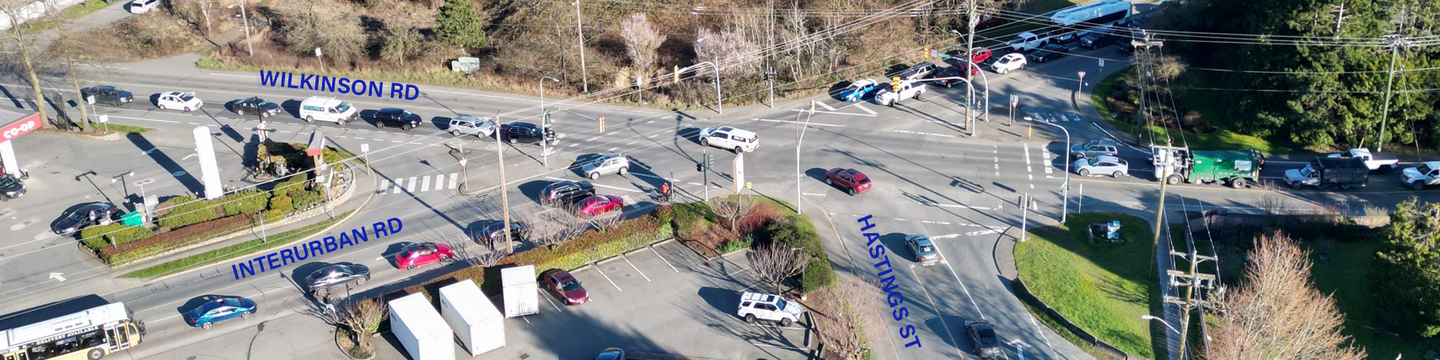
The District of Saanich is undertaking a conceptual design project for improvements to the Interurban/Wilkinson/Hastings Street Intersection. This work will explore options to improve safety, traffic operations, walking, cycling, and transit service at this important five-leg intersection.
Project update - September 2026
Thank you to everyone who participated in the first round of engagement for the Interurban-Wilkinson Project. The engagement summary is now available to review.
Review the engagement summary here.
The second round of engagement is anticipated in Spring/Summer 2027. In the meantime, please follow this page for future updates, including ways to participate.
About the project
The Interurban and Wilkinson intersection is a key part of Saanich’s local and regional transportation network. It’s a complex five-leg intersection that serves people traveling by all modes of transportation and has a long history of congestion, safety concerns, and neighborhood traffic impacts.
Phase 1 of the Interurban Wilkinson Project (conceptual design) will include technical analysis, public engagement, and the development and evaluation of concept options to identify a preferred conceptual design. Detailed design and construction would follow the conceptual design as future project phases, subject to approvals.
This work will consider not only the intersection itself, but also how changes could affect nearby streets, transit service, walking and cycling connections, utilities and access for the surrounding community.
Why are we doing this?
Improvements are needed because the intersection experiences operational and safety issues as travel demands have grown and become more multimodal over time. The goal of this phase is to identify a viable and balanced concept that can improve how the intersection works while responding to community priorities and District policy direction.
The project aims to:
- improve safety for all road users
- improve intersection operations and overall people-moving capacity
- support safer and more comfortable walking and cycling connections
- consider transit needs, including stop access and travel time reliability
- consider and mitigate potential traffic impacts on nearby neighborhood streets
- minimize property impacts and avoid non-essential property acquisition where possible
- align future improvements with Saanich’s; Official Community Plan, Active Transportation Plan, Road Safety Action Plan, Climate Plan, and other relevant District plans and policies.
Why your input matters
Public input is an important part of this phase of the project. Local knowledge helps the project team understand how people experience the intersection today, what issues matter most, and what trade-offs may need to be considered as concept options are developed and evaluated.
Your experiences and ideas are critical. We’re asking for your feedback early so we can shape the plan together. Your input will help us understand how you use the intersection, what your priorities are, and which options work best for people who live, work, and travel in the area.
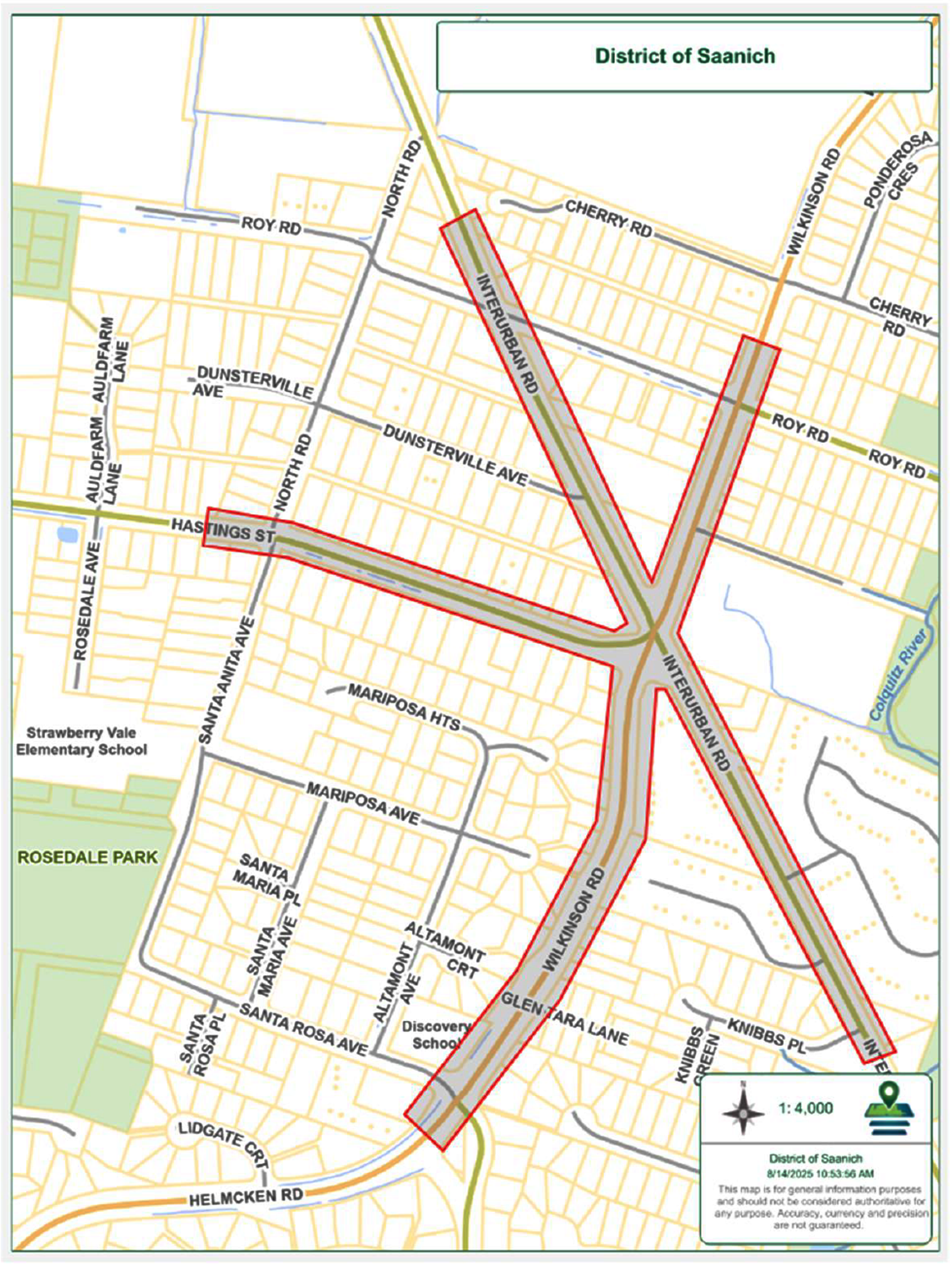
General project area
Stay informed
We’ll post updates, engagement summaries, and next steps here as the project moves forward.
Contact us:
Engineering Department
Phone: (250) 475-5575
Email: engineering@saanich.ca
Project Manager: Liz Christensen
Project Website: saanich.ca/helloIWP
How to participate
The next round of engagement is anticipated in Spring/Summer 2027. This page will be updated once details are available.
What we've learned
Round 1 Community Engagement (Spring-Summer 2026)
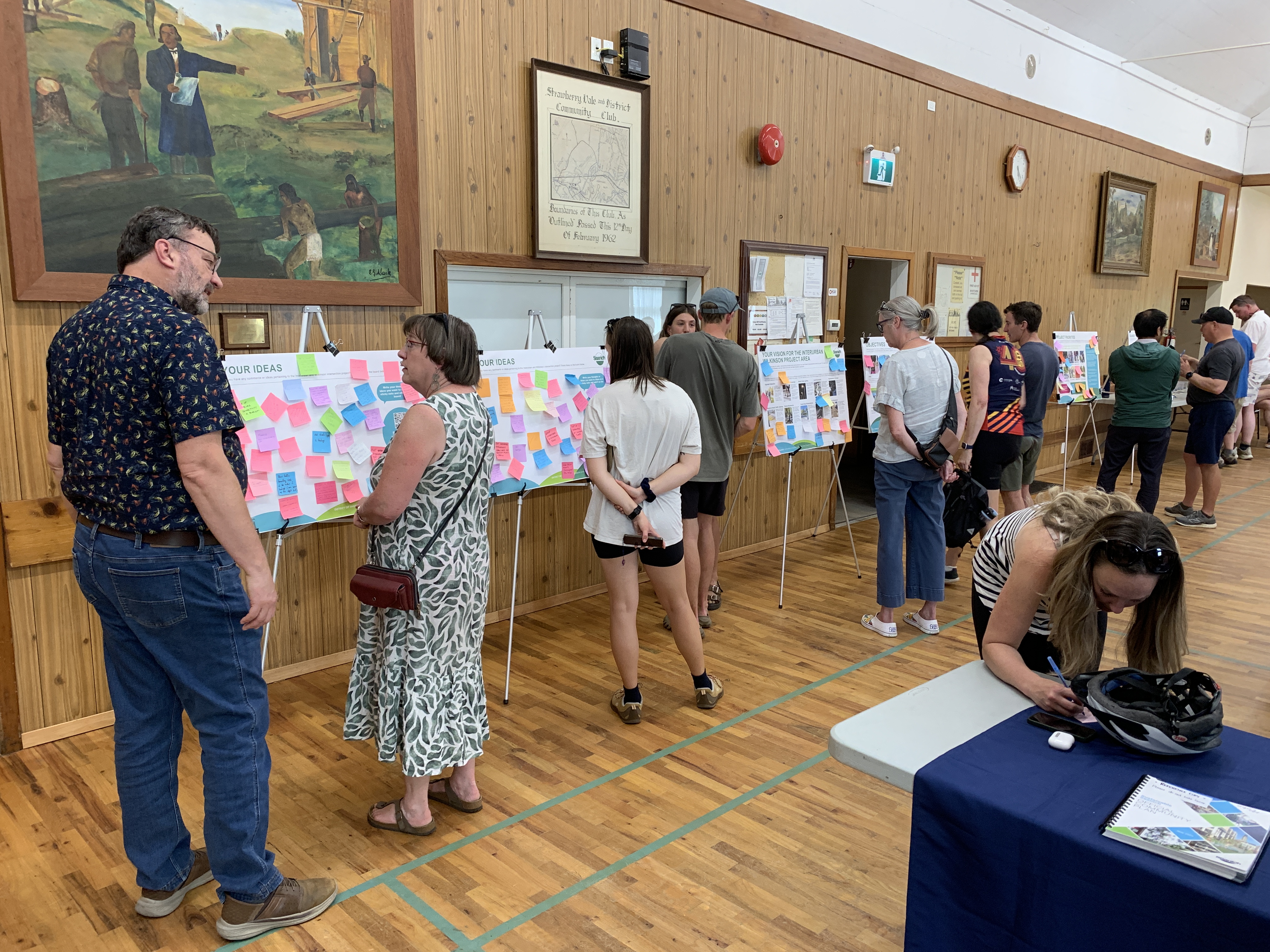
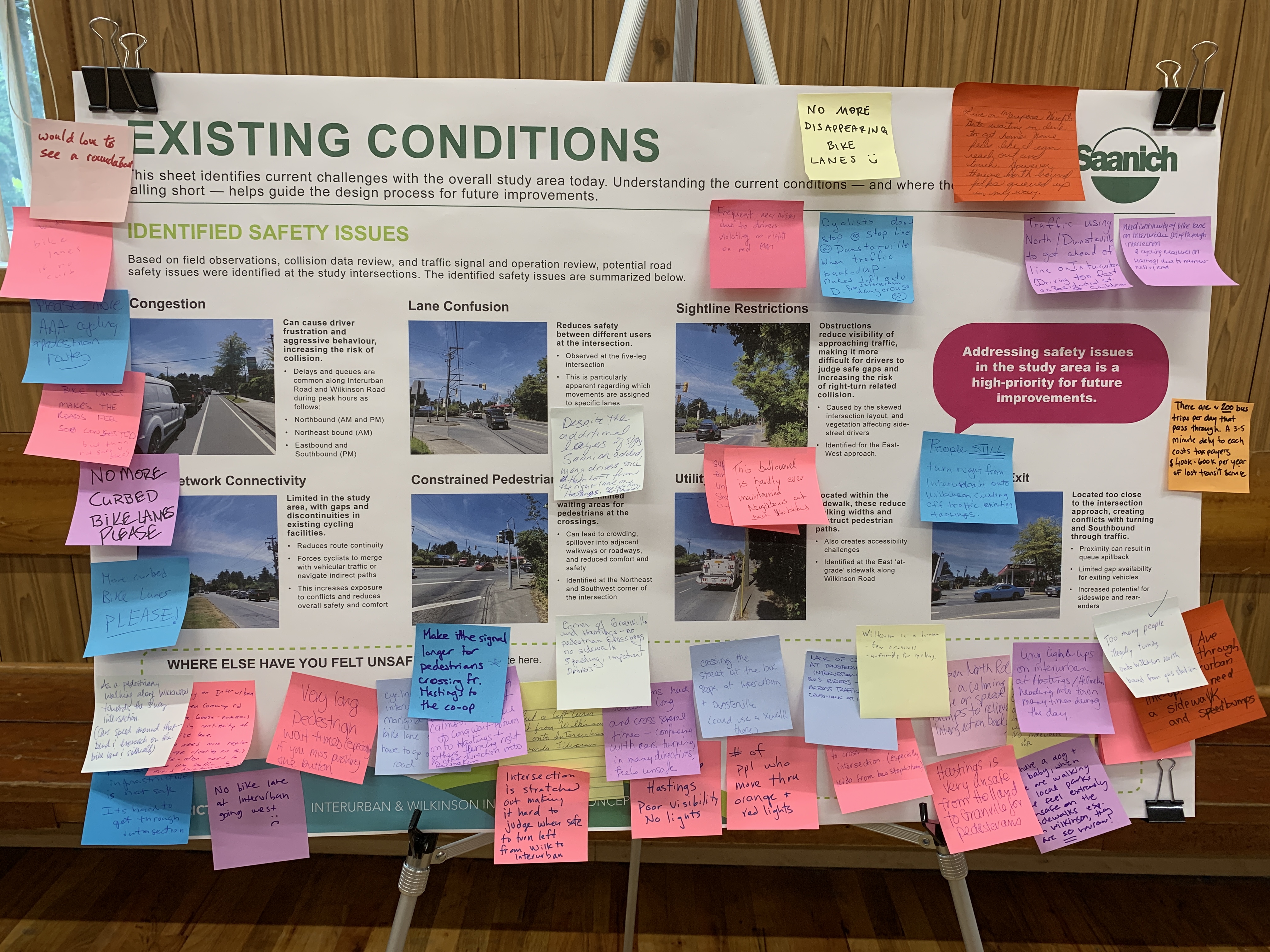
The first round of engagement asked community members how they use the intersection today, the challenges they experience, and their most important priorities for a new design. It included multiple formats, including an online survey and an in-person event to hear directly from all user groups.
In total, over 350 people attended the in-person event and the survey received 421 responses. An additional focus group meeting was held with BC Transit to discuss operational needs and concerns related to the intersection.
Overall Findings:
- Common challenges that participants experienced were traffic delays, long wait times at signals, difficulty turning, and difficulty cycling through the area.
- Community members provided many different suggestions for design changes, each with their own tradeoffs related to resident access, road capacity, turn restrictions, transit, and active transportation use.
- The highest overall priority for engagement participants was reduced congestion.
- There was limited representation from community members under 35 or people who use a mobility device.
Next steps (Phase 1)
Events
Past events
Event date: June 2nd, 2026 at 11:00 PM to June 3rd, 2026 at 3:00 AM.
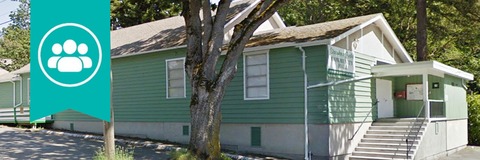
Strawberry Vale & District Community Club
75 registrants